How many taxi licences are there in Spain? 59,475 in 2026
· updated on · 6 min read · Taxio Team
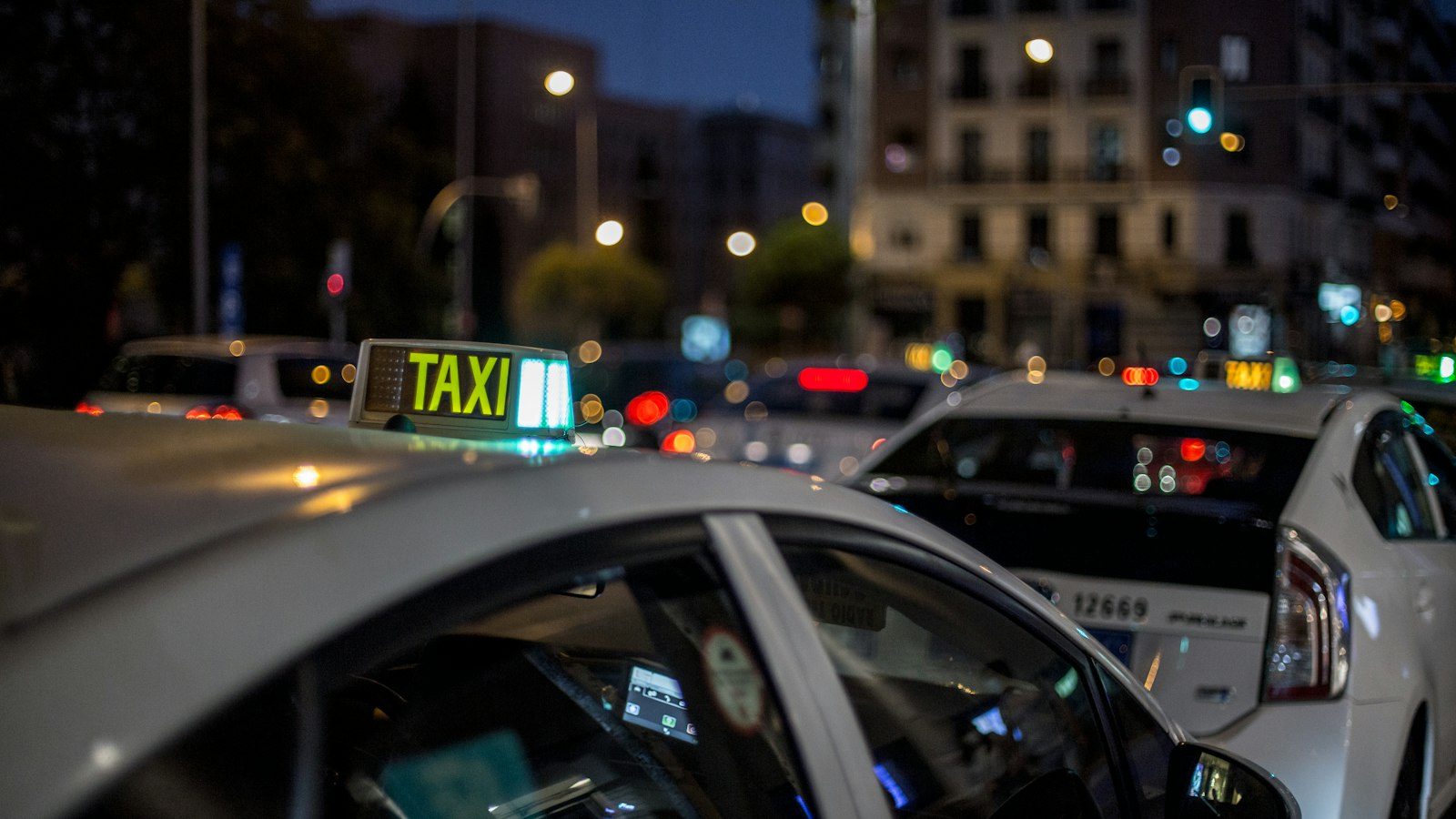
In short: Spain has 59,475 taxi authorisations and 27,306 VTC, both as of 1 October 2026, according to the Ministry of Transport register. The Madrid region has 15,804 taxis and 9,781 VTC. Taxis have lost nearly 4,000 authorisations so far this year, but that number is misleading, and it is worth understanding why.
How many taxi licences there are in Spain in 2026
These are the figures from the Ministry of Transport's general register, as consulted by Servimedia:
| Authorisations | End of 2025 | 1 Oct 2026 |
|---|---|---|
| Taxi (VT) | 63,474 | 59,475 |
| VTC | 24,259 | 27,306 |
In percentage terms, taxis are down 6.3% (3,999 fewer authorisations) and VTC are up 12.6% (3,047 more). Both figures share the same cut-off date, so this time they can be compared without caveats.
Mind what you are after: this is how many there are. If what you want to know is how much one costs to buy, that is a different matter: how much a taxi licence costs in Spain.
How many taxi licences there are in Madrid
Madrid is where everything concentrates, and the question comes up often enough to deserve its own section. As of 1 October 2026, the Madrid region has:
| Madrid region | Authorisations |
|---|---|
| Taxi licences | 15,804 |
| VTC authorisations | 9,781 |
Two readings worth keeping apart. The first: roughly one in four of Spain's taxi licences is in Madrid. The second, the one you actually feel on the street: the ratio. Nationwide there is one VTC for every 2.2 taxis; in Madrid, one VTC for every 1.6 taxis.
That ratio is what explains why a driver in Madrid and one in Zaragoza describe different realities while reading the same headline.
And here is a figure that gets passed around badly. It has been reported that Madrid accounts for 36.5% of Spain's estimated excess of VTC licences, with 9,254 authorisations above the historical benchmark of one VTC per 30 taxis. Read it carefully: that is a calculation against a benchmark, not a count of authorisations that have been annulled or declared illegal. In fact, that 1-per-30 limit is precisely the one the Supreme Court set aside in the Canary Islands, and the one the EU courts found contrary to European law in the terms they examined.
Why the fall in taxis is not what it looks like
Here is the nuance almost no headline carries. 2026 is a mandatory review year for both VT and VTC authorisations. The visado is a periodic administrative formality, and authorisations that do not complete it in time temporarily stop appearing as valid, although they can be reinstated later.
Put another way: part of those nearly 4,000 licences missing from the register are not taxis that have shut up shop, but paperwork pending. La Revista del Taxi says so explicitly: the drop cannot be read directly as thousands of taxis definitively disappearing.
The underlying trend is real: the taxi register has been shrinking for a while and the VTC one growing. But the size of this year's fall is inflated by the administrative calendar, and anyone telling you otherwise has not read the small print.
Where the VTC are concentrated
The breakdown by province as of 1 September 2026, according to figures published by La Gaceta del Taxi, makes clear this is not a uniform national phenomenon:
| Province | VTC authorisations |
|---|---|
| Madrid | 9,792 |
| Barcelona | 4,167 |
| Málaga | 3,461 |
| Alicante | 1,297 |
| Valencia | 776 |
| Balearics | 774 |
Madrid alone holds around 36% of all the VTC in the country. Madrid, Barcelona and Málaga together account for more than half. If you work outside those markets, the noise about platform competition looks little like what you see on your shift.
What it means for taxi drivers
First, distrust the figure on its own. A headline saying taxis have lost 4,000 licences without mentioning the visado is telling half the story. And half stories are no basis for business decisions.
Second, competition is local. What happens in Madrid or Málaga tells you nothing about your city. In Catalonia, the framework may change too: the new Catalan taxi law proposes cutting Barcelona's VTC licences. And in Madrid what is coming is not only more VTC: there are also Waymo's robotaxis, already in testing.
And third, the figure that really affects you is yours. Whether Spain has 59,000 taxis or 63,000 does not change what comes in for you this week. What changes it is how many hours you work, what each one actually pays and what goes out in expenses.
How Taxio handles this
Taxio does not keep the sector's statistics, it keeps yours. You record every ride with its platform's commission and every expense, and the app tells you your real average of euros per hour and your net instead of your gross. When the next headline about licences comes out, you will be able to compare what it says with what your own numbers show, which is the only thing that pays bills.
Frequently asked questions about taxi licences in Spain
How many taxi licences are there in Spain in 2026?
The Ministry of Transport register shows 59,475 taxi authorisations (VT) as of 1 October 2026, down from 63,474 at the end of 2025. That is 3,999 fewer, a 6.3% drop so far this year.
How many taxi licences are there in Madrid?
The Madrid region has 15,804 taxi licences and 9,781 VTC authorisations, according to the Ministry of Transport register as of 1 October 2026. That means roughly one in four of Spain's taxi licences is in Madrid.
How many VTC are there in Spain?
27,306 VTC authorisations as of 1 October 2026, up from 24,259 at the end of 2025. That is 3,047 more, a 12.6% increase so far this year.
How many VTC are there per taxi in Spain?
Nationwide there is one VTC authorisation for every 2.2 taxi licences. In Madrid the ratio is one VTC for every 1.6 taxis, one of the highest in Spain.
Why have taxi licences fallen in 2026?
Part of the fall is administrative: 2026 is a mandatory review (visado) year for both VT and VTC authorisations, and those that do not complete the paperwork in time temporarily stop appearing as valid, though they can be reinstated later. So the drop does not mean nearly 4,000 taxis have disappeared from the street.
Keep reading

Spain taxi news this week: Madrid, Spain and Europe

Spain taxi fares 2027: rises of 3.5% to 6% by city
How much does a taxi licence cost in Spain? €145,000-220,000
All articles
- Spain's Supreme Court strikes down the 1 VTC per 30 taxis cap
- DGT changes from 1 October: what affects taxi drivers
- Catalonia's taxi law: 600 fewer VTC licences and Brussels' warning
- Waymo robotaxis in Madrid: testing now, passengers in 2027
- Verifactu and the taxi trade: who is actually required to comply, and from when
- One in three taxi licences in Salamanca is now held by a foreign professional
- Mandatory seatbelts for taxi drivers from October 1: the exemption that disappears
- 'Dominguito': the 1988 Mercedes still driving as a taxi in Gran Canaria after 7 million kilometres
- The Seville taxi driver who returned a bag with over €4,000 to a tourist couple
- Barcelona's 1943 electric taxi that swapped batteries in minutes — no charging wait at all
- Uber, Free Now, Cabify and Bolt commissions for taxi drivers in Spain (2026)
- Gross vs. net: what you really earn behind the wheel
- Deductible taxi expenses in Spain: the 16 worth tracking
- Your average euros per hour: the number that puts your shift in order