Catalonia's taxi law: 600 fewer VTC licences and Brussels' warning
· 6 min read · Taxio Team
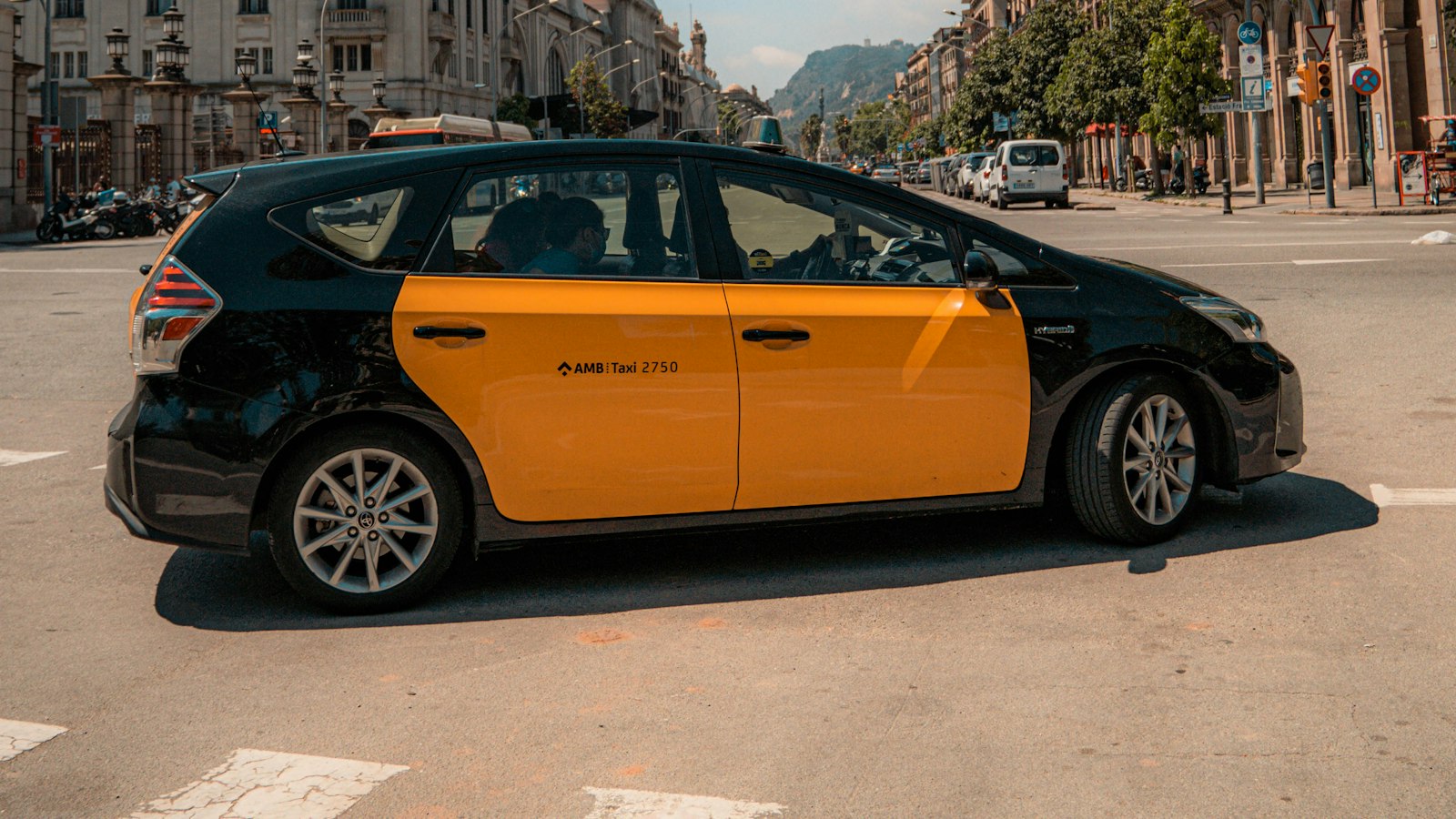
In short: Catalonia's new taxi law is still moving through the Parlament despite the European Commission's opinion of 24 August 2026, which froze the process until 28 September. The text would leave urban service in the hands of taxis and remove 600 of the 990 VTC licences operating in Barcelona. Brussels has not struck the law down, but warns it could take it to the European court if it passes as it stands.
What Catalonia's taxi law proposes
The bill regulates passenger transport in vehicles of up to nine seats and puts the taxi at the centre of the system: it treats it as a service of general economic interest, with public service obligations (universality, accessibility, continuity) and the official fare system.
The part making the most noise is the licences. According to Xataka, of the 990 VTC licences operating in Barcelona today, 600 would disappear and around 390 would remain; across Catalonia roughly 15% of the current total would survive. Those that do could keep running until they expire, so this is not an overnight shutdown but a gradual withdrawal, as La Revista del Taxi explained.
What the European Commission halted (and what it did not)
On 24 August 2026 the European Commission issued an opinion freezing the text in the Parlament until 28 September and requiring Spain to report what changes it intends to make. According to Crónica Global, Brussels holds that when it comes to digital services, European rules override Catalan ones.
The distinction the Commission draws is the heart of the matter:
- Vertical intermediation: platforms exercising decisive influence over the service, assigning rides, selecting drivers, setting conditions or prices. The Commission treats these as part of the transport service, citing the European court ruling in Elite Taxi v Uber (C-434/15). Here Catalonia can regulate.
- Horizontal intermediation: platforms that merely connect user and carrier without organising or controlling the trip. For these, Brussels questions whether a prior notification requirement can be imposed when it works as a disguised authorisation, because it clashes with the country-of-origin principle of the e-commerce directive and with the EU digital services regulation.
What matters for the sector: the opinion does not annul the law. As La Gaceta del Taxi put it, Brussels has not struck the rule down. Élite Taxi Barcelona argues the opinion does not challenge the general model of the law and that a technical fix to the horizontal intermediary provisions is enough. What the Commission has made clear is that it could open infringement proceedings before the European court if the text passes unchanged.
Where the process stands
The law has been moving since March 2026, when the Parlament rejected the wholesale amendment and decided to press ahead. The calendar now hangs on that 28 September deadline: after it, the Territory Committee has to debate the text, and approval looks unlikely before the end of 2026.
In other words, nothing has changed on the street today. No licences have been withdrawn, there are no new deadlines to meet and no paperwork to file. What exists is a bill in progress whose timetable has shifted.
What it means for taxi drivers
First, be patient with headlines. Between Europe strikes down the law and VTCs disappear from Barcelona there is a middle ground, and that is where reality sits: a live bill, with a European opinion on top of it and a parliamentary debate ahead.
Second, the timetable is long. Even if the law passed at the end of 2026, licences would be withdrawn gradually, as they expire. Nobody will notice a change in demand from one month to the next.
Third, competition is not only regulatory. While this gets decided, the national register keeps moving: as we see when reviewing how many taxi licences there are in Spain, taxi authorisations are falling and VTC ones rising across the whole country, not just in Catalonia.
How Taxio handles it
Taxio will not decide how this law ends, and does not pretend to. What it does is give you the number your own decisions rest on: you log every ride with its platform commission and your expenses, and you see your real average euros per hour and your net, not your gross. If competition in your city changes, that figure is what tells you whether it is actually affecting you or only looks like it.
Frequently asked questions about Catalonia's taxi law
When will Catalonia's new taxi law be approved?
There is no firm date. The European Commission's opinion of 24 August 2026 froze the bill until 28 September 2026, the deadline for Spain to report what changes it will make. After that, the Parlament's Territory Committee still has to debate the text, so approval is unlikely before the end of 2026.
What happens to VTC licences in Barcelona?
The bill would remove 600 of the 990 VTC licences operating in Barcelona, leaving around 390. The rest could keep working until they expire. Across Catalonia as a whole, according to Xataka, roughly 15% of current licences would remain.
Has Brussels struck down the Catalan taxi law?
No. The opinion does not annul the law: it questions specific points about horizontal intermediation platforms and requires Spain to explain what it will change. Élite Taxi Barcelona argues the opinion does not challenge the law's general model. The Commission does warn it could open infringement proceedings if the law passes unchanged.
Which taxi drivers does the Catalan taxi law affect?
Those working in Catalonia, and most directly those in urban Barcelona, where most of the affected VTC licences are concentrated. It does not apply outside Catalonia, though the sector is watching closely because it would set a regulatory precedent.
Keep reading
- How many taxi licences are there in Spain? 60,469 in 2026
- Waymo and robotaxis are coming to Spain: when, where and what it means for taxis
- Verifactu and the taxi trade: who is actually required to comply, and from when
- One in three taxi licences in Salamanca is now held by a foreign professional
- How much a taxi driver really saves going electric: from €700 to €300 a month
- Mandatory seatbelts for taxi drivers from October 1: the exemption that disappears
- 'Dominguito': the 1988 Mercedes still driving as a taxi in Gran Canaria after 7 million kilometres
- The Seville taxi driver who returned a bag with over €4,000 to a tourist couple
- Barcelona's 1943 electric taxi that swapped batteries in minutes — no charging wait at all
- Uber, Bolt, Cabify and Free Now commissions: 5% to 25% of your fare (2026)
- Gross vs. net: what you really earn behind the wheel
- Deductible taxi expenses in Spain: the 16 worth tracking
- Your average euros per hour: the number that puts your shift in order