Waymo and robotaxis are coming to Spain: when, where and what it means for taxis
· 6 min read · Taxio Team
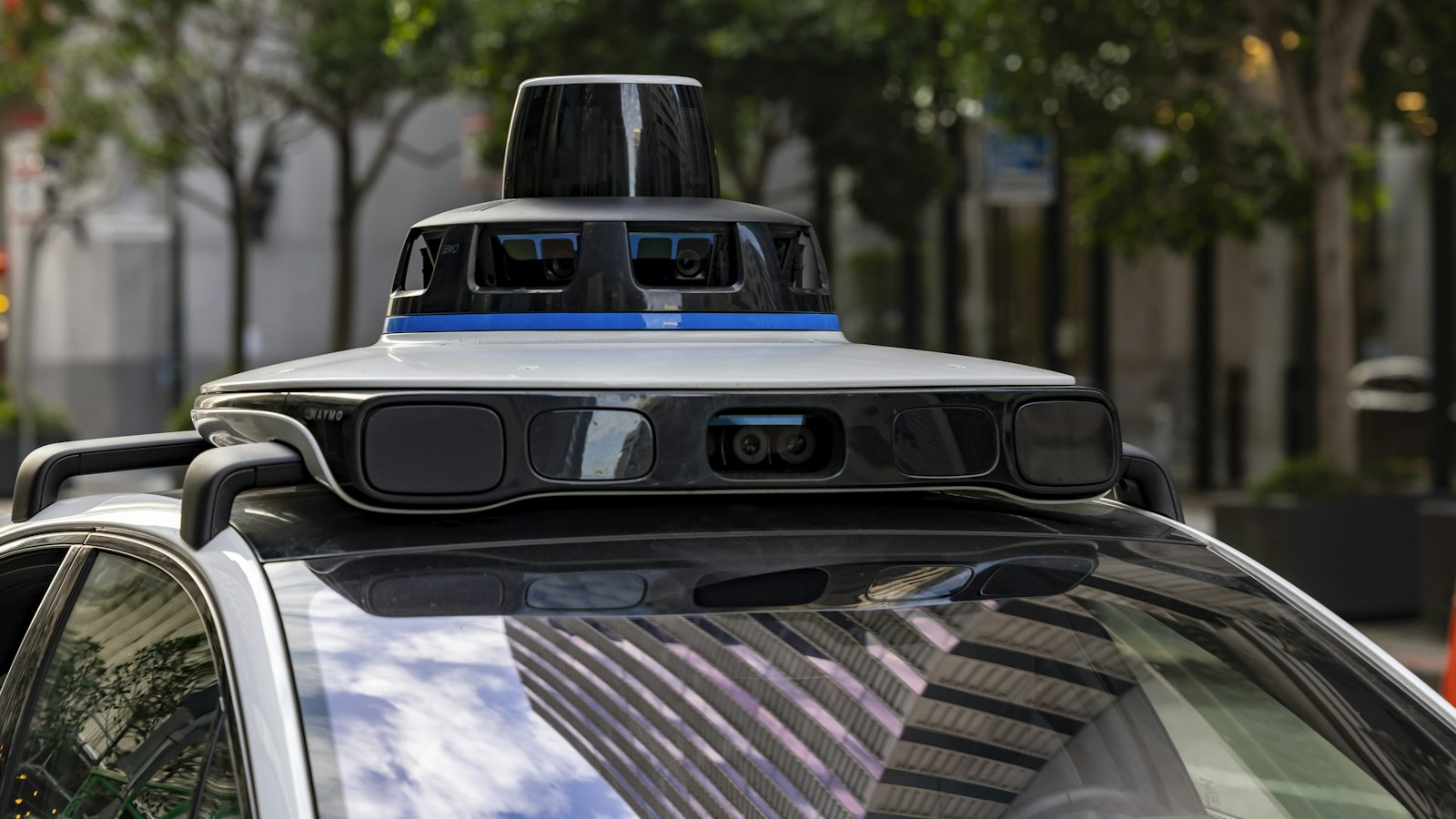
In short: Waymo, the self-driving car company owned by Alphabet (Google's parent), now has a company in Spain, though still with no permit, no fleet and no partner. The one that has taken the first real step is Uber: Spain's traffic authority has given it the first authorisation to test 20 level-4 robotaxis in Madrid, with a specialist on board, from late 2026.
Waymo now has a company in Madrid
The news was broken by La Gaceta del Taxi: Waymo Iberia SL appears in the Spanish Companies Register with an address on Calle Serrano in Madrid, €100,000 in share capital and a corporate purpose that explicitly mentions transport with autonomous vehicles.
Having a company isn't the same as having a service. As of today, Waymo has no authorisation to test its cars in Spain, no fleet in the country and no confirmed deal with any platform operating here.
What it does have is scale abroad. On September 1 it opened its service to the public in Denver, San Diego and Tampa, which brings it to 14 US cities and more than 4,000 vehicles, according to TechCrunch. Its next announced steps in Europe are London and Munich.
The DGT's first permit: 20 robotaxis in Madrid
The move that does have a date is Uber's. According to La Gaceta del Taxi, the DGT has granted it Spain's first authorisation for level-4 autonomous passenger cars, which it will run with WeRide and Avomo:
- 20 vehicles in the initial phase.
- Level 4: the system drives by itself, but within defined conditions and a limited area.
- With a specialist inside the car during this first phase.
- Operations planned before the end of 2026.
As Demócrata points out, the permit opens the testing phase: it doesn't mean you can already book a car in Madrid with nobody at the wheel.
When will there be driverless robotaxis in Spain?
The honest answer is that there's no date yet. Madrid's first cars will have a person on board, and nobody has said when that will stop being necessary. Spain also still lacks specific rules for a commercial service without human supervision.
It's worth keeping the two apart: what starts in late 2026 is supervised testing with 20 cars, not an open driverless service.
What it means for taxis
First, scale. Twenty cars in testing against more than 61,000 taxi licences in Spain, according to Ministry of Transport data reported by La Gaceta del Taxi. In the short term, nobody's shift changes.
Second, taxis have a seat at the table. In August, the DGT, the regional governments, platforms such as Uber, Waymo, Bolt and Free Now, and representatives of the taxi sector presented a first set of ten recommendations for bringing in driverless cars, as reported by Motor16 and La Revista del Taxi. They call for a single national law and authority, and one of the ten points is a fair transition, with adaptation periods and professional retraining for taxi drivers and other drivers.
And third, the heart of it is economic. What a robotaxi removes from the equation is the cost of the driver. So more than the technology, what will matter is how much each hour of a human-driven taxi really earns.
How Taxio handles it
Taxio can't predict what will happen with robotaxis, and it won't try. What it does is tell you what each hour really leaves you: you log every ride with its platform's commission and your expenses, and you see your real average euros per hour and your net, not the gross. Whatever competition comes along, that's the number decisions get made with.
Frequently asked questions about robotaxis in Spain
When are robotaxis coming to Spain?
The first authorised trial is in Madrid: Spain's traffic authority (DGT) has cleared Uber, together with WeRide and Avomo, to run 20 level-4 autonomous cars, with a specialist on board, from late 2026. A public service with nobody at the wheel has no date yet.
Is Waymo going to operate in Spain?
Waymo has set up a company, Waymo Iberia SL, in Madrid, but as of today it has no DGT authorisation to run trials, no fleet in Spain and no confirmed partner to operate here.
Will Madrid's robotaxis have someone on board?
In the first phase, yes: a specialist will ride inside the vehicle. The authorisation opens the testing phase, but it doesn't yet let anyone book a driverless car in Madrid.
What does it mean for taxi drivers?
For now the numbers are symbolic: 20 test vehicles against more than 61,000 taxi licences in Spain. The taxi sector took part in August in the first set of recommendations for regulating driverless cars, which includes a fair transition with adaptation periods and professional retraining.
Keep reading
- Verifactu and the taxi trade: who is actually required to comply, and from when
- One in three taxi licences in Salamanca is now held by a foreign professional
- How much a taxi driver really saves going electric: from €700 to €300 a month
- Mandatory seatbelts for taxi drivers from October 1: the exemption that disappears
- Bilbao offers 10 free accessible-taxi licences, two reserved for women drivers
- 'Dominguito': the 1988 Mercedes still driving as a taxi in Gran Canaria after 7 million kilometres
- The Seville taxi driver who returned a bag with over €4,000 to a tourist couple
- Barcelona's 1943 electric taxi that swapped batteries in minutes — no charging wait at all
- Uber, Bolt, Cabify and Free Now commissions: 5% to 25% of your fare (2026)
- Gross vs. net: what you really earn behind the wheel
- Deductible taxi expenses: the 16 worth tracking
- Your average euros per hour: the number that puts your shift in order